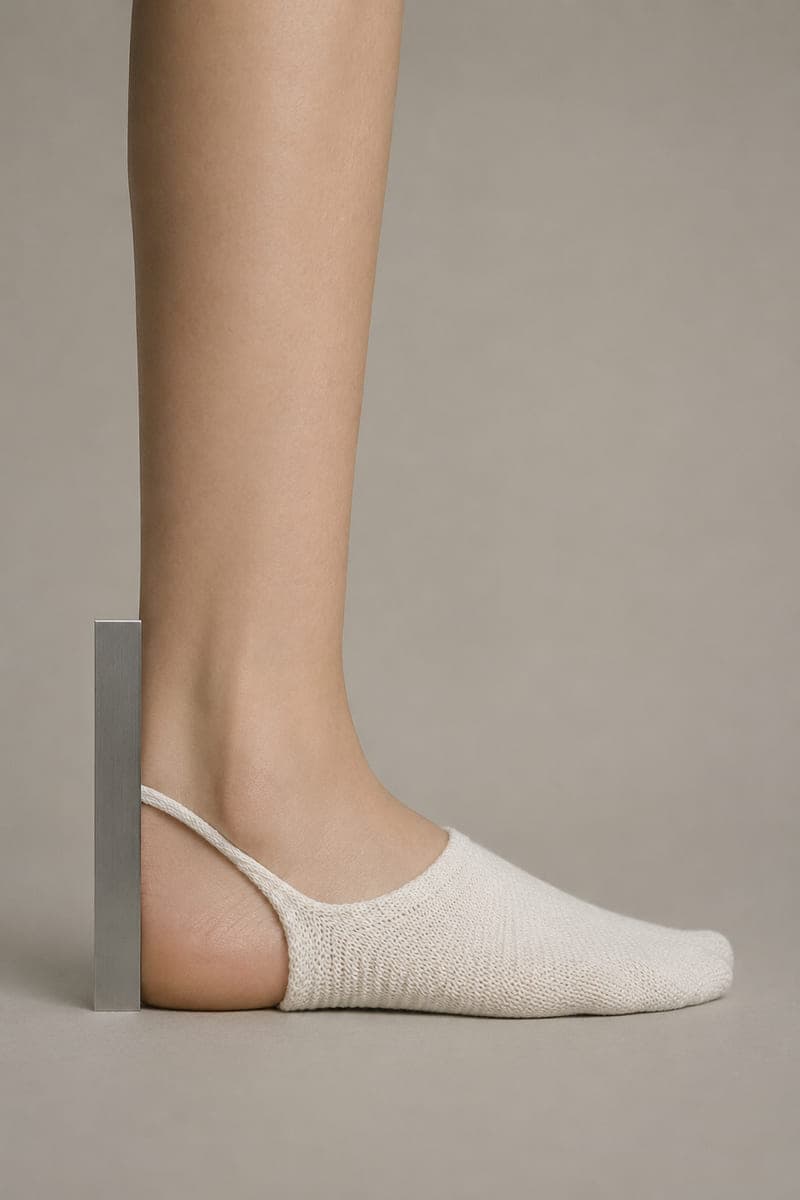
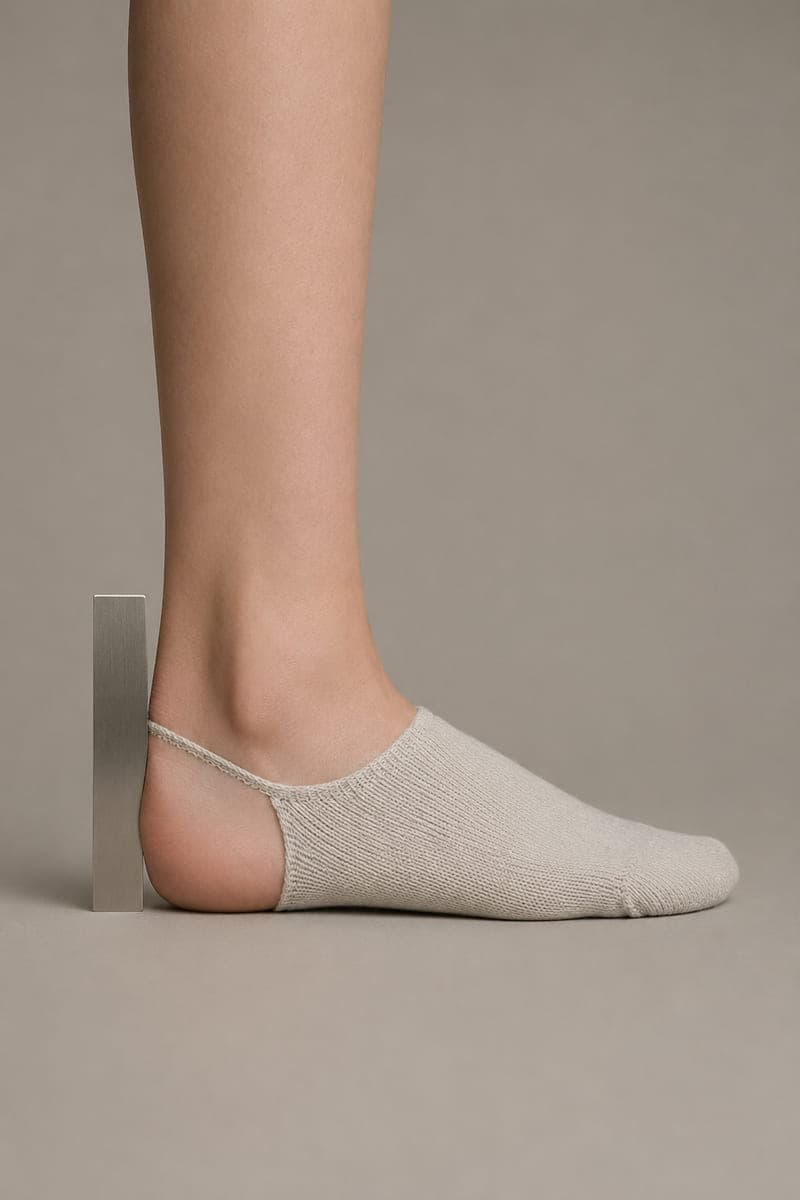
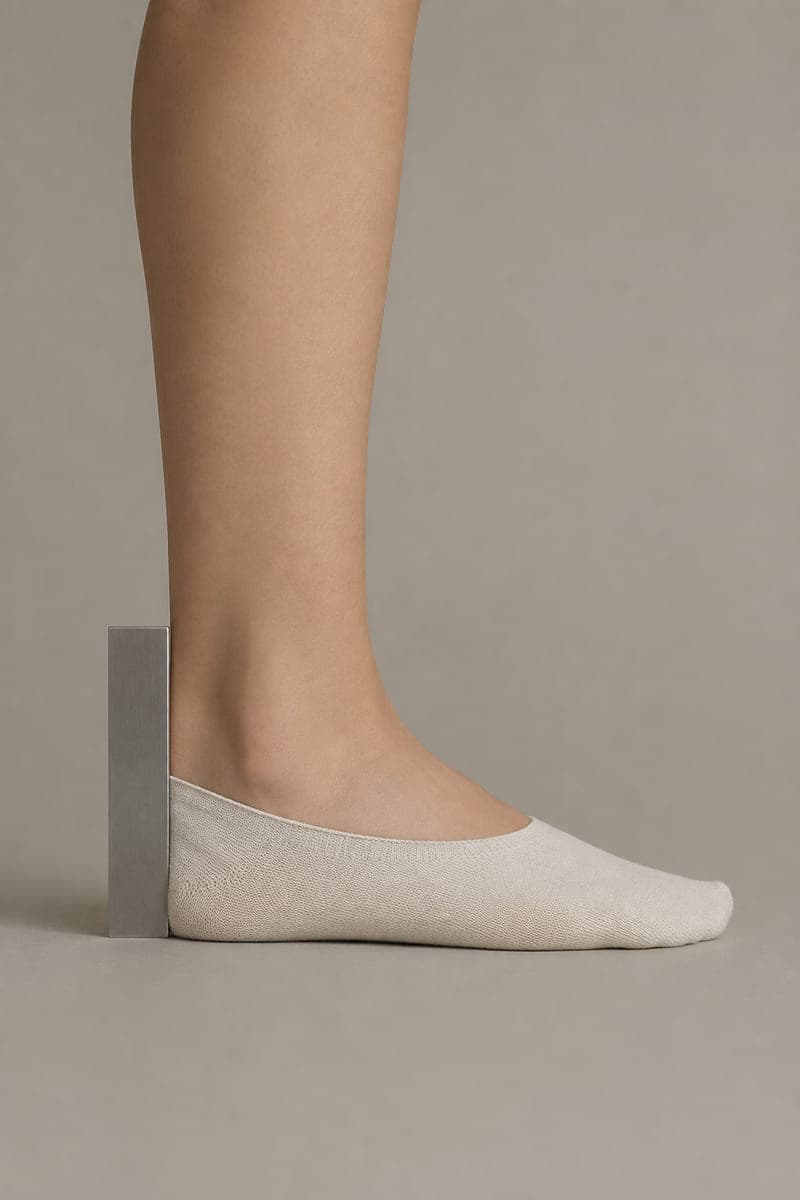
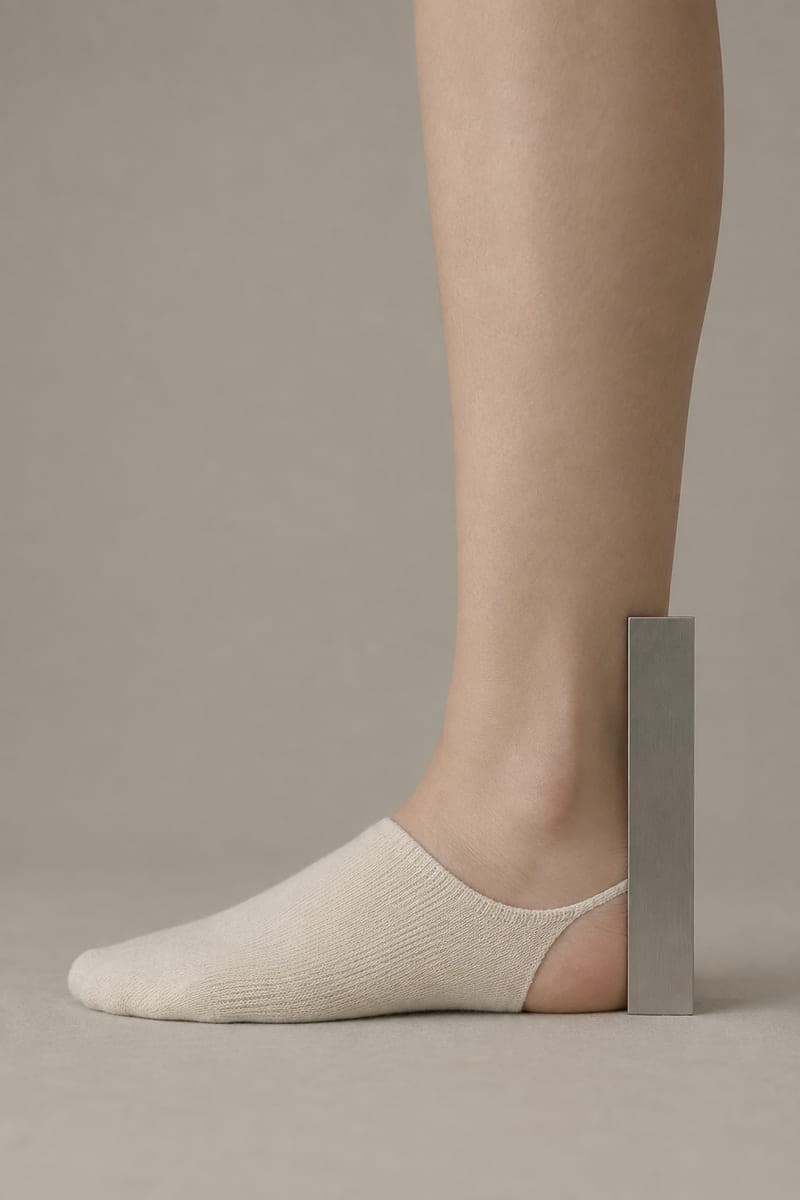
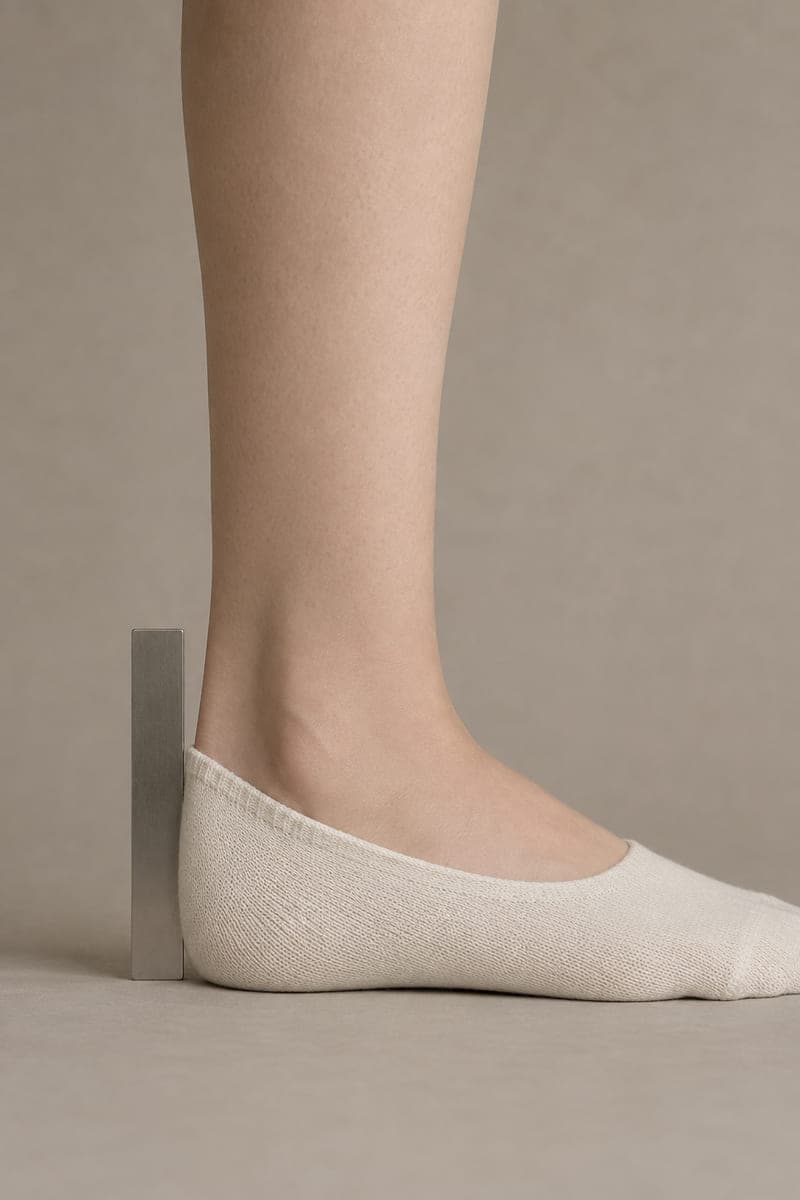
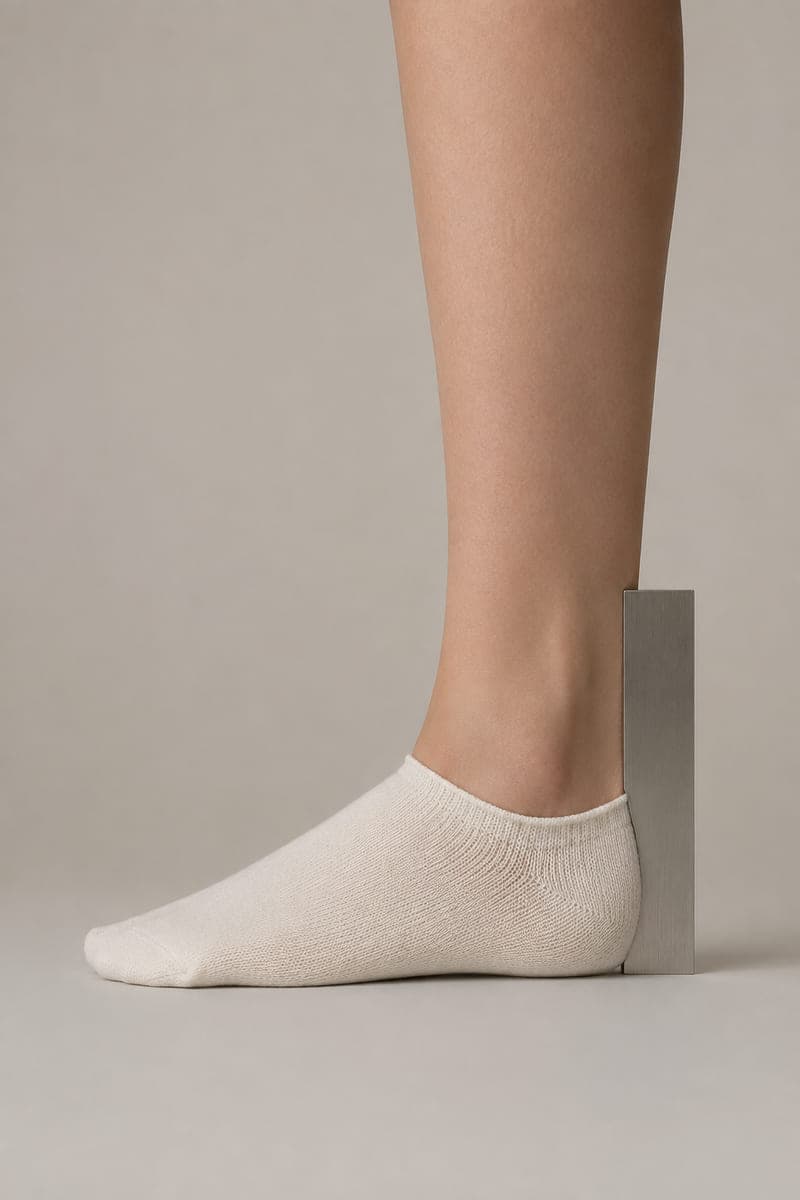
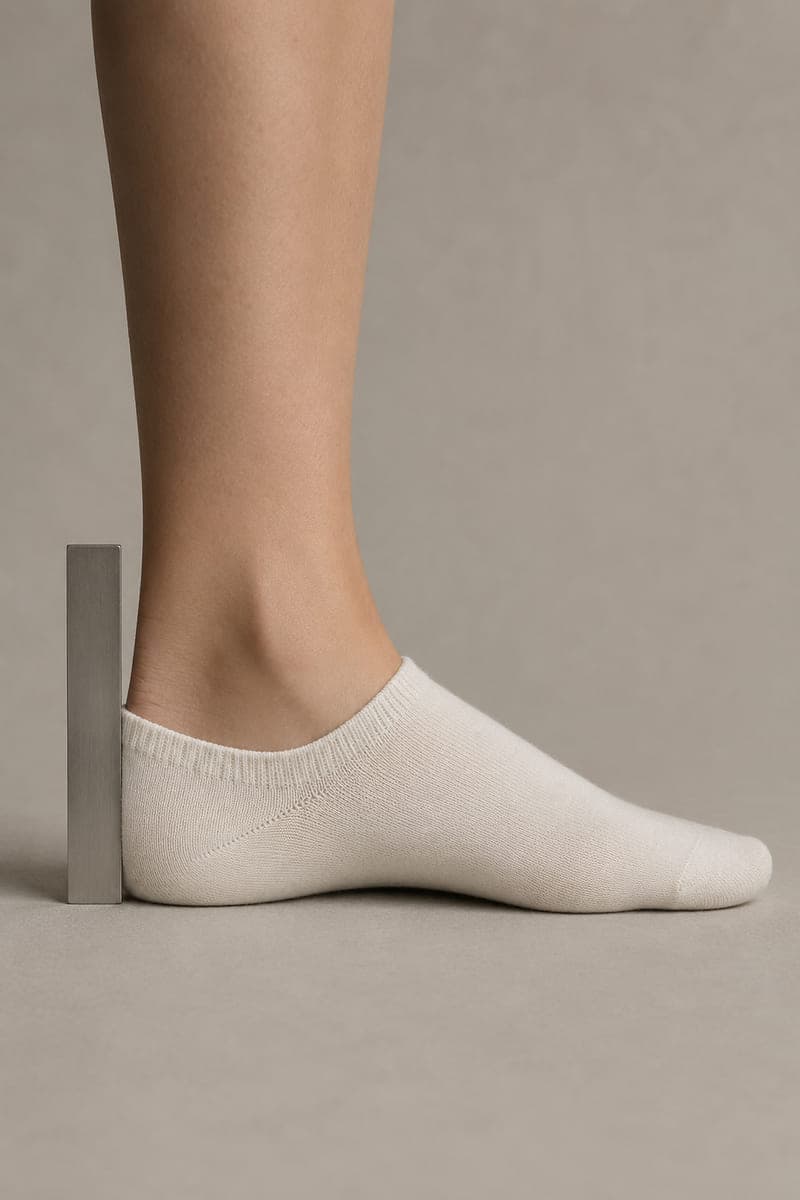
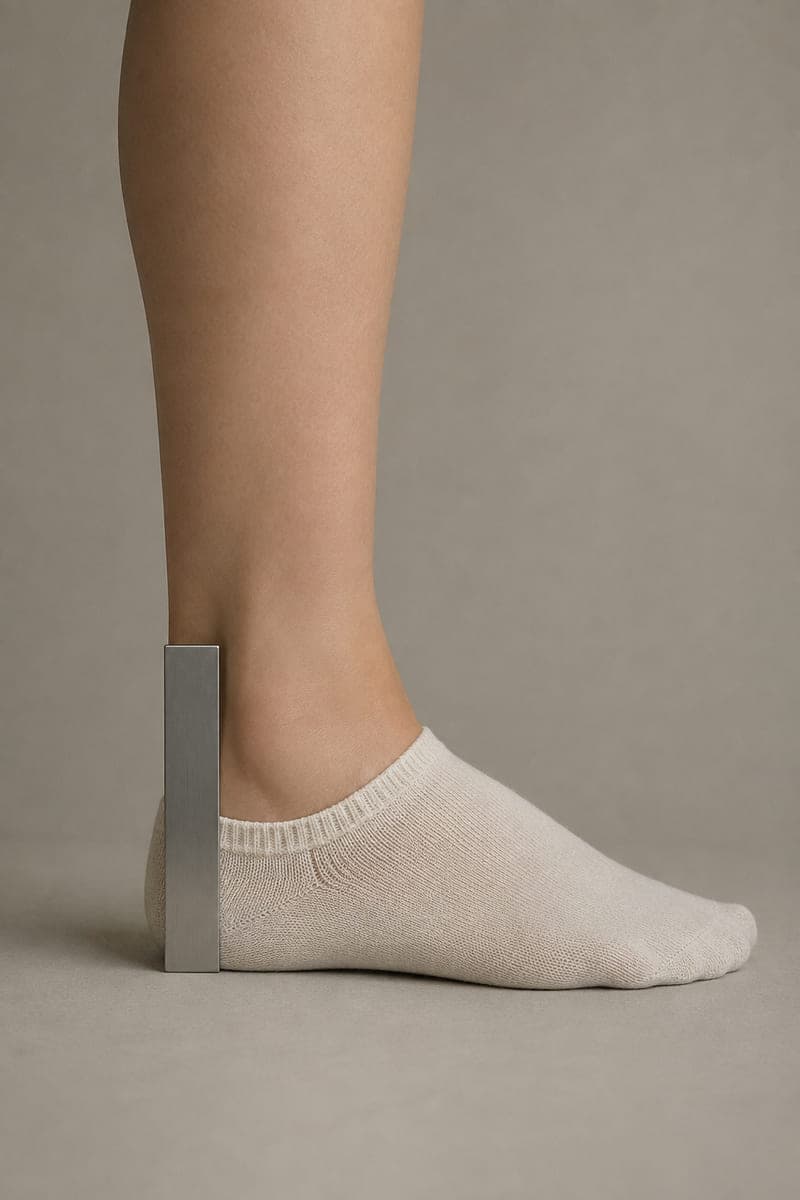
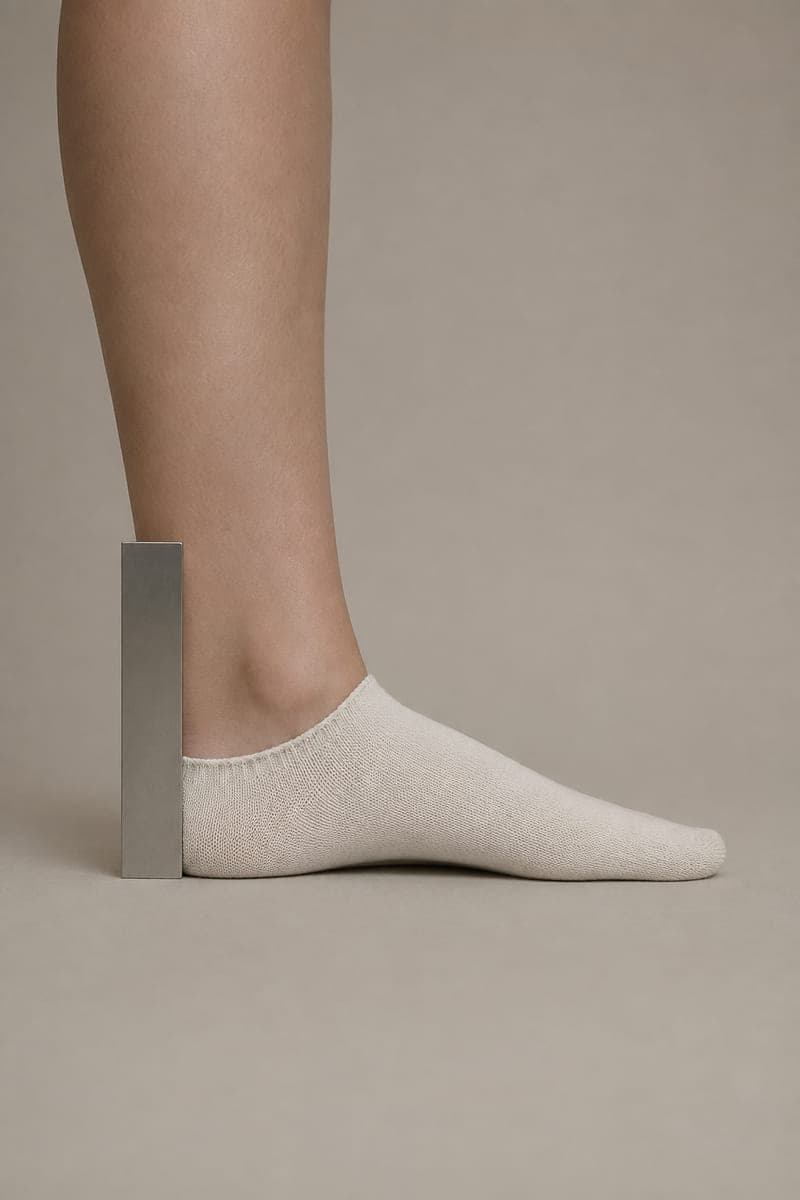
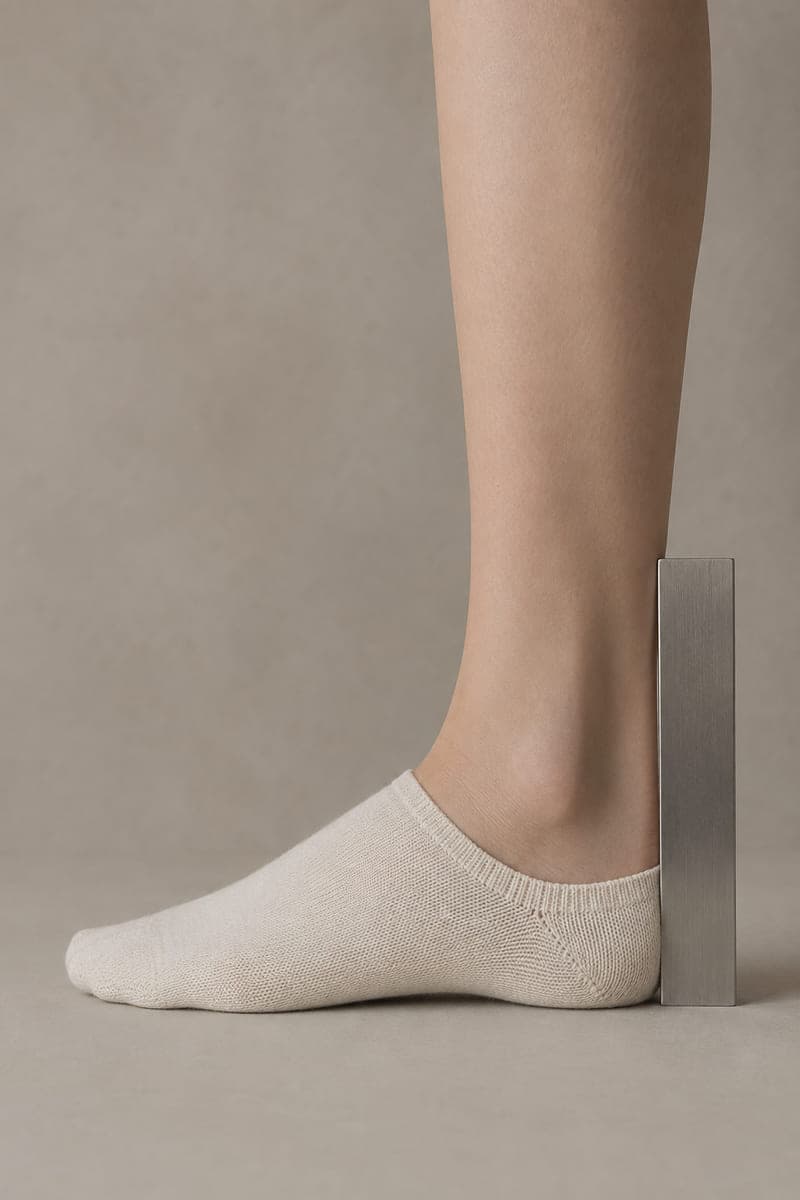
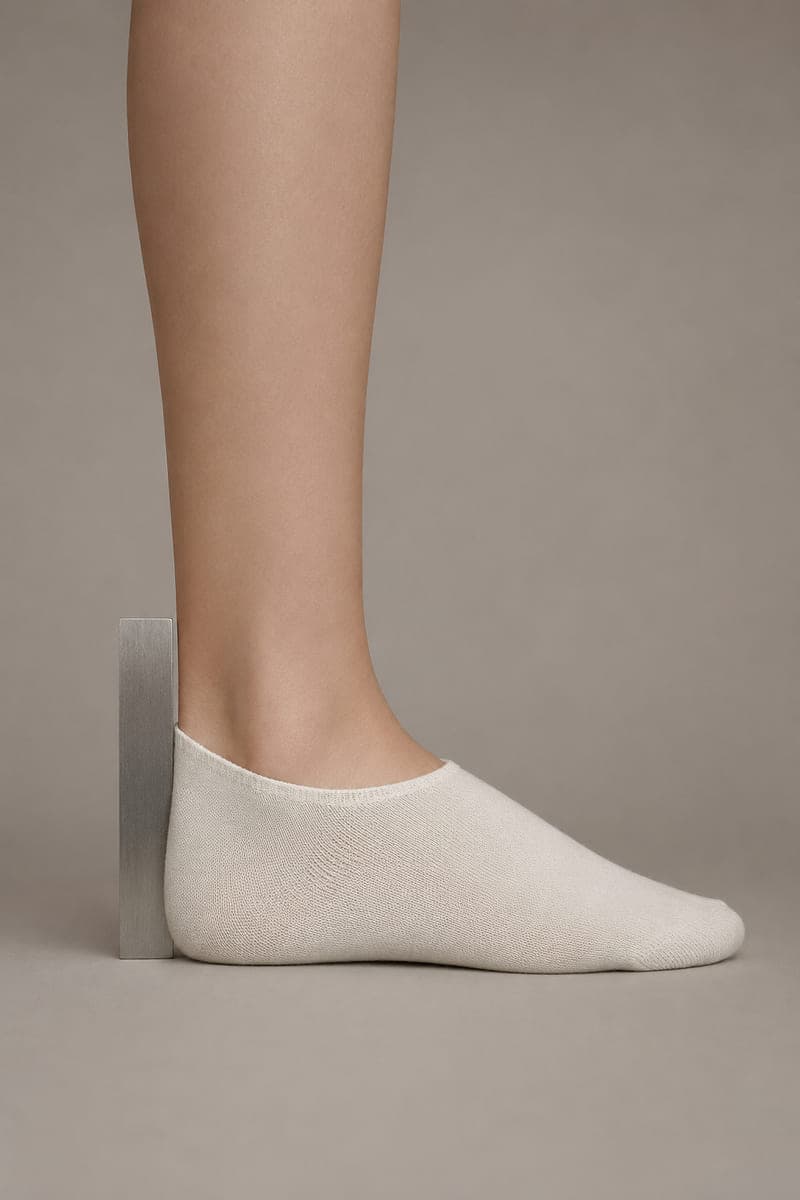
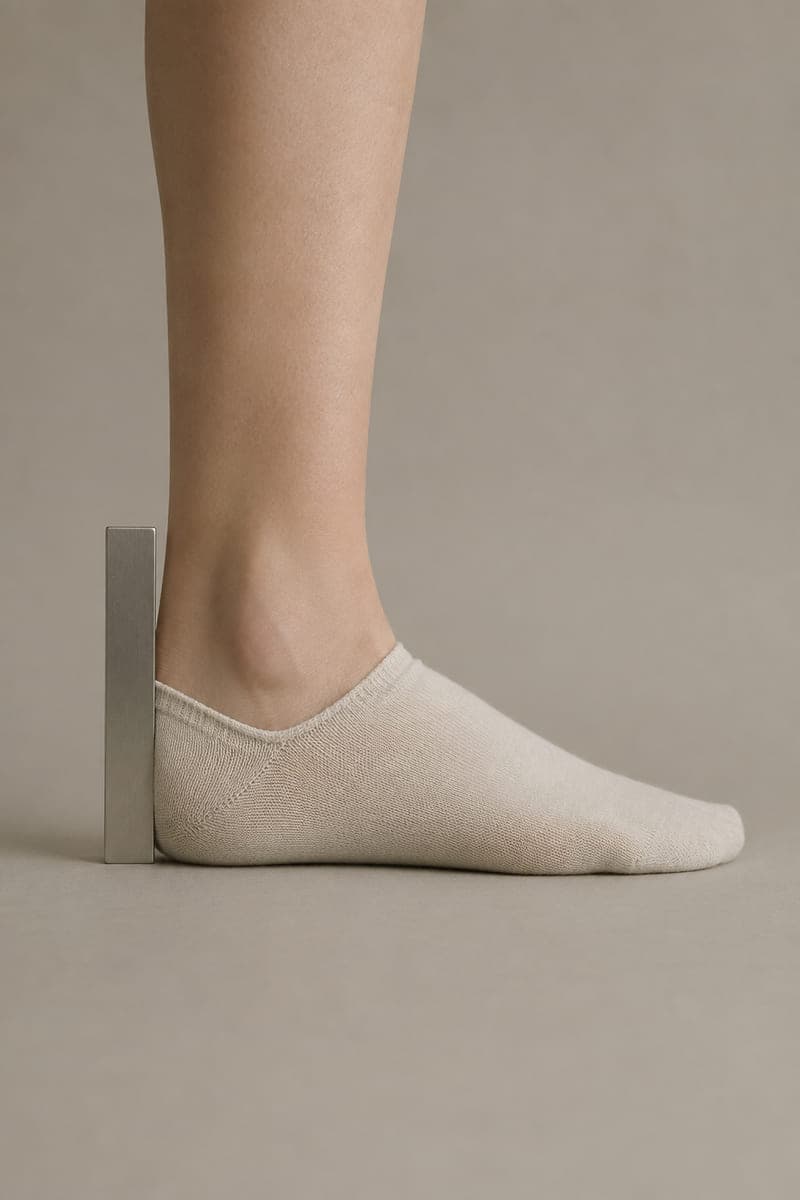

Silicone dot
With siliconeOne small patch at the centre of the heel. The least material against the skin, and the least surface doing the work.
Schoenrand
Everything on this site rests on two measurements taken the same way. This page explains exactly how, and is equally clear about what the numbers cannot tell you.
What we do not promise
No sock stays up in every shoe on every foot. Cuff height, heel shape, how the shoe fits and how you walk all matter. We give you the measurements so you can compare them to your own shoes.
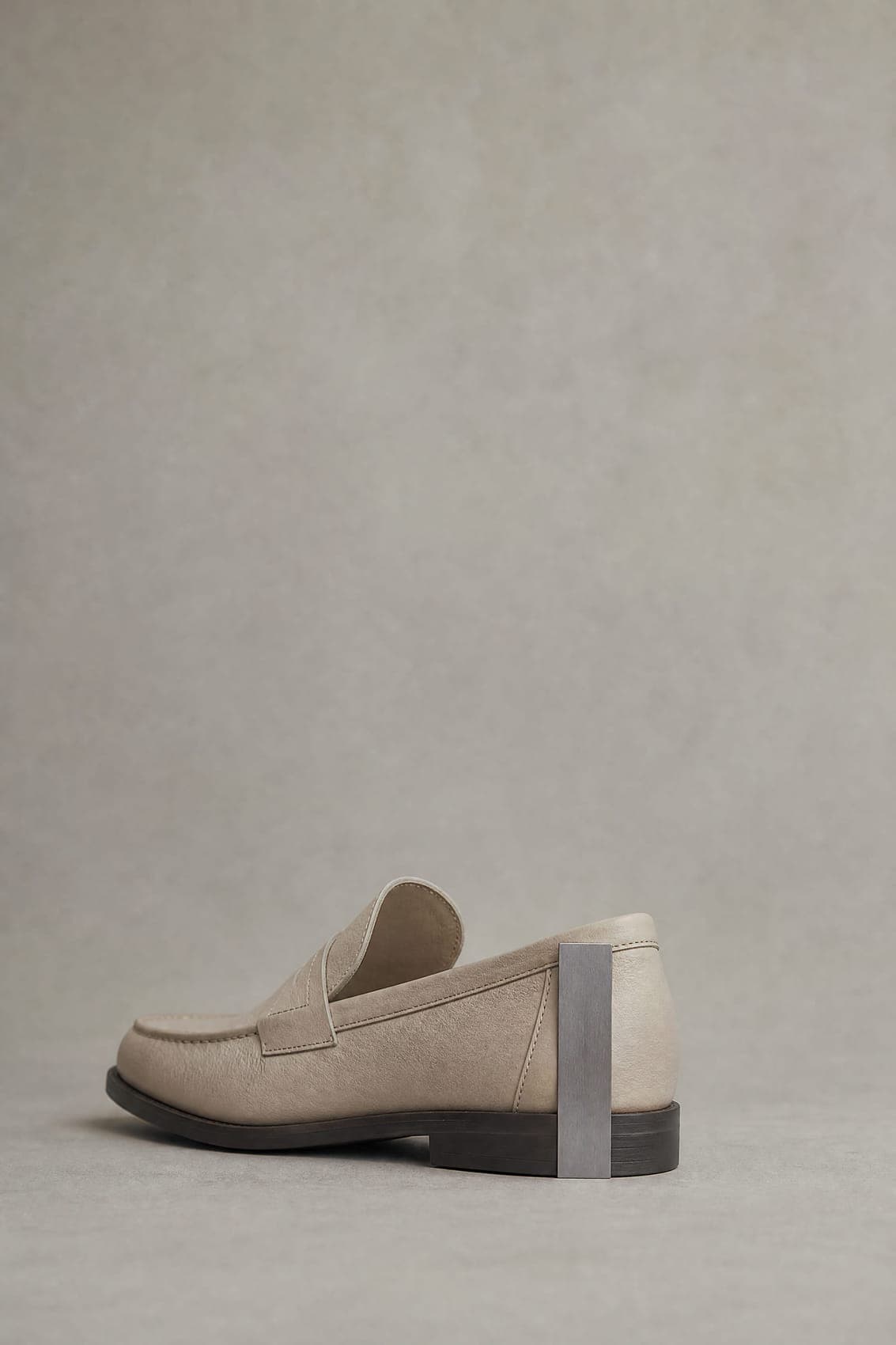
Shoe opening is measured at the back, from the surface the shoe rests on to the lowest point of the opening.
01
A table or a floor. Not a rug, not a shoe box. The measurement starts at whatever the sole rests on.
02
Follow the collar of the shoe round to the back. Where it dips lowest is the point that decides whether a sock shows.
03
Hold the rule upright against the outside of the heel. Read the millimetres. That single number is what we need.
Cuff height is measured at the back, from the surface the sole rests on to the top edge of the sock.
Same floor, same direction, same unit. That is the only reason the two numbers can be subtracted from one another. A cuff height measured from the top of the heel, or from the ankle bone, would give a different answer and would not be comparable to your shoe.
opening − cuff = clearance
5 to 16 mm
The band we recommend. Enough margin that the cuff stays under the opening as the shoe flexes, and enough fabric above the heel to hold the sock in place. Within this band we list the smallest clearance first, because the highest cuff has the most fabric doing the work.
Under 5 mm
Below the opening on paper only. A shoe opens up as you walk and a sock rides down over a day. We show these, flagged, and we say plainly that they may show.
Over 16 mm
Hidden, with room to spare, but with a lot of bare skin inside the shoe. Some people find that rubs. We list these separately rather than pretending they are the best answer.
Every column is measured from the same floor: the surface the sole rests on. The taller the column sits, the higher the cuff.
Published because people ask for them, with the caveat they deserve.
| Shoe type | Opening at the back |
|---|---|
| Ballet flat | 38–52 mm |
| Low loafer | 50–65 mm |
| Derby or oxford | 52–68 mm |
| Low trainer | 55–75 mm |
| Boat shoe | 60–80 mm |
These are typical ranges, not measurements of your shoes. Measure yours.
The spread inside each row is 12 to 20 mm, which is wider than the gap between three of our cuff heights. A table like this cannot choose a sock for you. It is here to tell you roughly what to expect before you pick up a rule, and nothing more.
Six mechanisms, each stated with its dimensions. None of them is a guarantee and we do not describe any of them as one.
One small patch at the centre of the heel. The least material against the skin, and the least surface doing the work.

A continuous band along the whole heel curve. Spreads the contact instead of concentrating it at one point.

The same shape, much wider. More silicone is not automatically better; it depends on your heel. It is also more obvious to feel.

Two thin bands with knit between them. Some heels hold better on two narrow lines than on one wide one.

Silicone all the way round, including across the instep. The most contact we make, and the item most likely to bother sensitive skin.
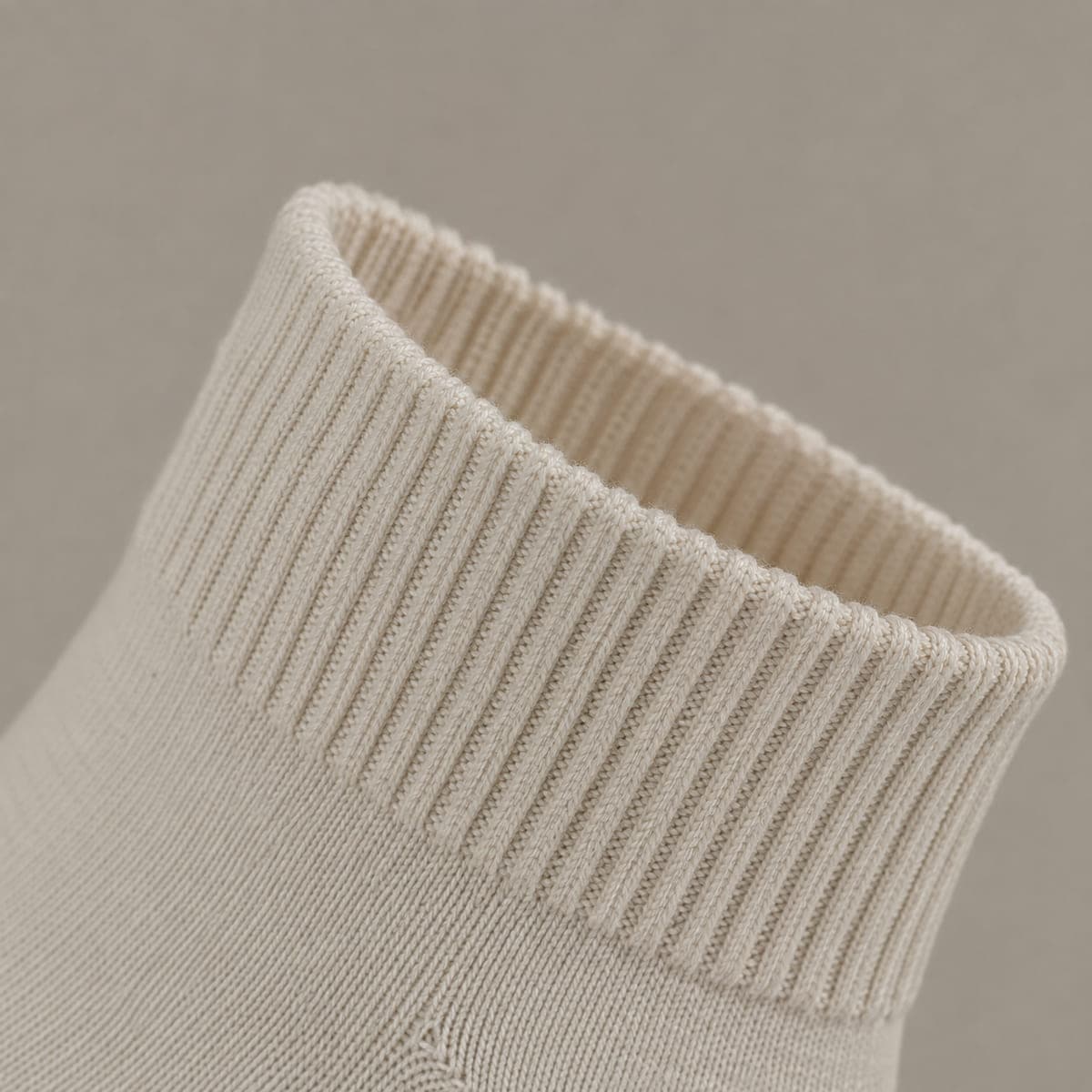
An elastic knitted band and nothing else. Typically holds less firmly than silicone, but there is nothing on your skin.
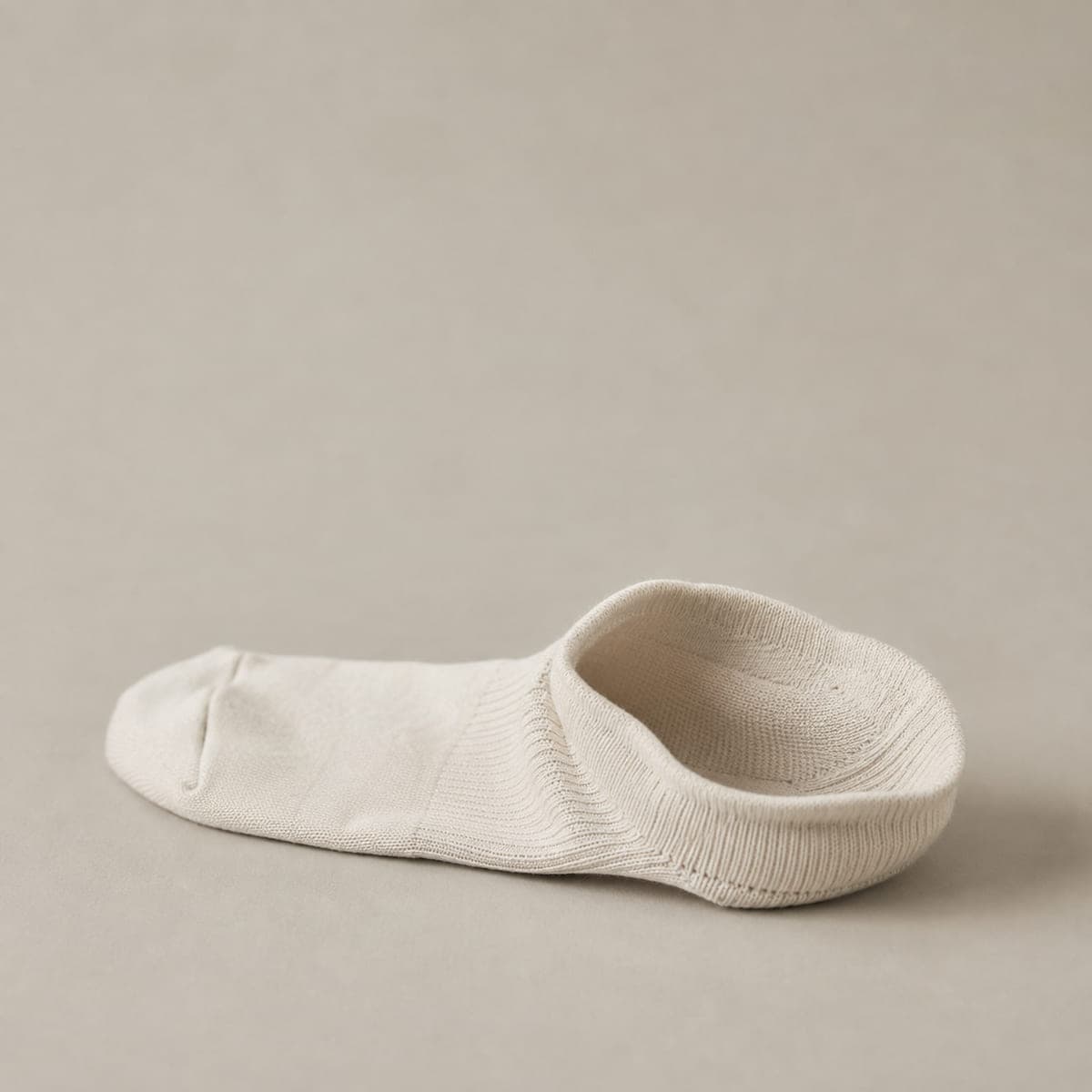
The heel is knitted deeper so the sock has somewhere to sit rather than something to grip. On a narrow heel this often beats a band alone.

New on the left, washed many times on the right. The grip fades gradually. That is wear, not a fault. Silicone peeling away from the fabric in the first weeks is a fault.
Silicone sits against your skin. Some people find it uncomfortable or irritating. 16 of our 41 socks have no silicone anywhere. See the silicone-free socks.
How it fades
Silicone grips better on dry skin. Lotion, sweat and repeated washing all reduce it. The grip fades gradually over the life of the sock.
Wear or fault
Silicone loses grip gradually with washing and skin contact. That is wear. Silicone peeling off the fabric in the first weeks is a fault.
Concretely: a band that still grips but noticeably less than it did after fifty washes is wear, and is not something we replace. A band that lifts at the edge, peels away from the knit or comes off in a strip within the first weeks of normal wear is a fault, and is something we deal with under your statutory rights.
Against your skin
Silicone sits against your skin. Some people find it uncomfortable or irritating. The fabric-band line has no silicone at all. We make no claim that our silicone is hypoallergenic, medical grade or safe for any particular skin condition, because we have no basis for one. What we can do is offer the same heights without it: 16 of our 41 socks contain no silicone at all.
If a sock matches the cuff height and hold structure printed on its page, and it still slides down in your particular shoe on your particular foot, that is not a product that fails to match its description. It is a product doing what we said it would in conditions we told you we cannot control.
We only get to say that because we publish the measurements before you buy. If we had sold you the word “invisible” and nothing else, the same slipping would be our problem. That is the trade this whole site is built on, and it is stated the same way in conformity and guarantee.
A sock whose stated cuff height is wrong, whose silicone peels off in the first weeks, or which is knitted with a hole in it, is a different matter entirely, and is covered.
If you think we have got this wrong in your case, write to support@stepsfootsocks.quest and argue with us. We would rather look at it than have you keep a sock that does not work.
Send us the opening of your shoe and we will tell you which of ours fits it, or that none of them does. That is a shorter conversation than a return.